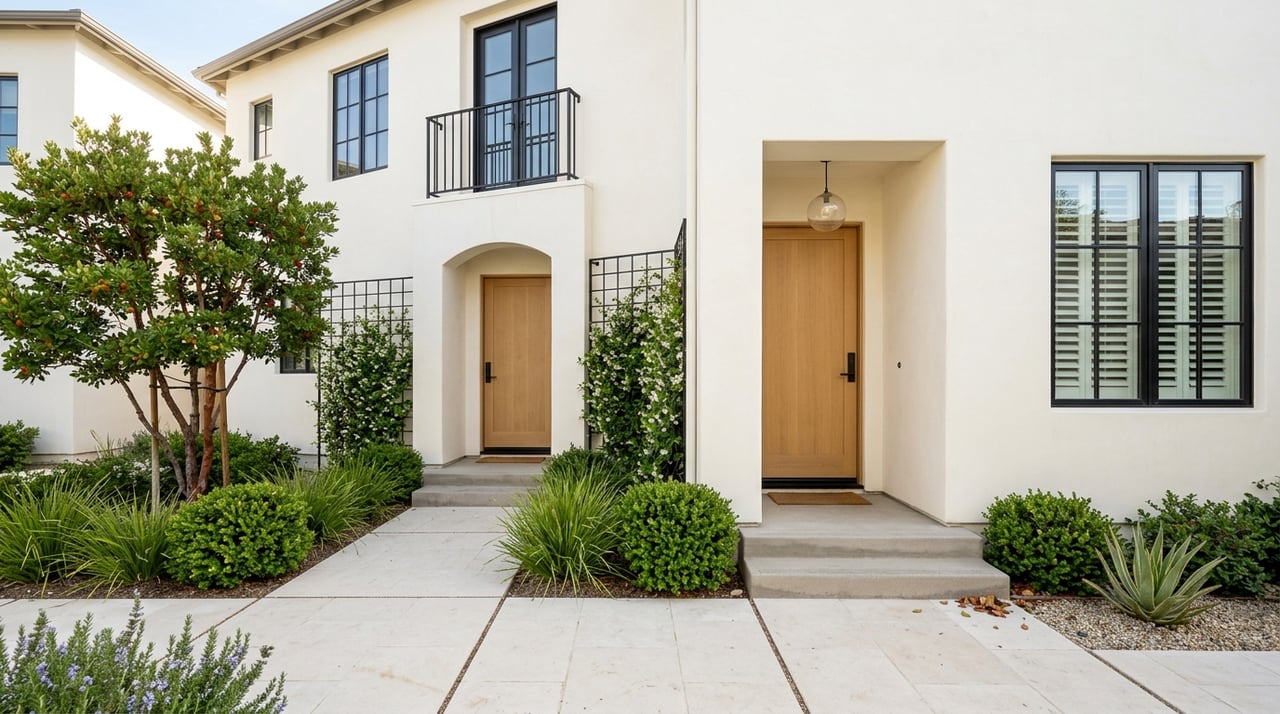
Sunnyvale Townhome Or House? How To Decide
July 2, 2026
July 2, 2026
Trying to choose between a townhome and a house in Sunnyvale? You are not alone. For many buyers, this decision comes down to more than price. It shapes your monthly costs, your weekends, your privacy, and how much control you have over the property over time. If you are weighing both options, this guide will help you compare the tradeoffs clearly so you can decide with more confidence. Let’s dive in.
In Sunnyvale, this is a practical decision, not just a style preference. The city reports that detached single-family homes once made up the largest share of housing, but by 2020 multifamily housing had become the majority of units, and attached housing had grown since 2010.
That matters because many buyers today are choosing between two very different ownership experiences. A detached single-family home is a standalone dwelling on its own lot, while a townhome is an attached unit. In real life, that usually means you are comparing maintenance, privacy, outdoor space, and HOA involvement.
If budget is a major factor, the current price gap is hard to ignore. Santa Clara County Association of REALTORS® snapshots show Sunnyvale single-family homes with a median sold price of $2.65M at year-end 2025 and $2.675M in February 2026.
In those same reports, Sunnyvale condo and townhome median sold prices were $1.385M at year-end 2025 and $1.4612M in February 2026. That puts attached homes roughly $1.2M lower at the median, though the gap can shift from month to month.
For many buyers, that difference changes the whole conversation. A townhome may offer a more accessible entry point into Sunnyvale ownership, while a detached house may offer more autonomy in exchange for a much higher price.
Both property types move fast. The same market snapshots show average days on market of about 15 to 20 days for single-family homes and about 23 to 28 days for condo and townhome properties.
Sale-to-list ratios also show strong competition. Single-family homes were selling around 110 percent to 111 percent of list price, while condo and townhome properties were around 103 percent to 107 percent. In other words, Sunnyvale usually does not reward slow decision-making, no matter which type you choose.
For many busy professionals, maintenance is where the choice becomes clear. With a detached house, you are typically responsible for the home, the yard, the exterior, and the systems on the lot.
With a townhome, some of that responsibility may shift to the homeowners association. Under California’s Davis-Stirling Act, the association is generally responsible for repairing, replacing, and maintaining common areas, while the owner is generally responsible for the separate interest unless the governing documents say otherwise.
That can be a major benefit if you want a simpler ownership experience. It can also mean regular dues and the possibility of special assessments, because associations are required to levy regular and special assessments sufficient to perform their obligations.
If you are considering a townhome, do not stop at the monthly HOA number. The more important question is what the HOA actually covers.
Some Sunnyvale communities may cover landscaping, roofs, or shared systems. Others may cover much less. The California Department of Real Estate advises buyers in common interest developments to review governing documents, reserve funding, budgets, and assessment history carefully.
A lower purchase price does not always mean a lower total cost of ownership. You need to look at dues, reserves, past assessments, and the condition of the community before making a fair comparison.
Sunnyvale’s own housing definitions make one tradeoff pretty straightforward. A detached single-family home stands on its own lot, while townhomes are attached in groups and share walls or party walls.
In practical terms, a detached home usually gives you more separation from neighbors and more private outdoor space. A townhome usually offers a smaller, more contained footprint with less exterior upkeep.
That does not mean every house is private or every townhome feels tight. Site layout, lot size, and community design all matter. Still, if privacy and yard use are high on your list, detached homes often line up better with those priorities.
Your next move is not the only thing to think about. You also want to consider what the property can do for you over time.
If you want more freedom for future changes, a detached house often provides more flexibility. Sunnyvale’s ADU toolkit notes that single-family lots can support attached or detached ADUs, which can become part of the planning conversation for owners thinking about future expansion or rental use.
That kind of flexibility may matter if you expect your needs to change. A townhome may still be the right fit, but it usually comes with more community rules and less control over exterior changes.
In Sunnyvale, age and condition should be part of the decision too. The city notes that the largest age band of housing was built from 1960 to 1979.
The city also says homes over 30 years old often show rehab needs such as roofing, foundation, or plumbing work. That is especially relevant for detached-home buyers, because more maintenance responsibility often stays with the owner.
For buyers comparing a townhome and a house at very different ages or renovation levels, condition can outweigh labels. A well-maintained attached home may offer fewer near-term projects, while an older detached house may require more cash and coordination after closing.
If you are stuck between the two, it helps to narrow the question. In Sunnyvale, the decision often comes down to whether time or control matters more to you.
A townhome often makes more sense if you want:
A detached house often makes more sense if you want:
Neither option is automatically better. They simply solve different problems.
Before you decide, compare each option through the lens of daily life and total ownership cost. A smart comparison usually includes:
If you work long hours, travel often, or want weekends with fewer home tasks, a townhome may fit your lifestyle better. If you care most about autonomy, private outdoor space, and future flexibility, a detached house may justify the higher cost.
Sunnyvale gives buyers strong options in both categories, but the right choice depends on how you want to live, not just what looks best on paper. In this market, townhomes usually buy back time, while detached homes usually buy back control.
When you compare options carefully, the answer often becomes much clearer. If you want help weighing ownership costs, property condition, and long-term fit in Sunnyvale, Kelly Dippel offers thoughtful, high-touch guidance designed to make your next move feel more manageable.
Stay up to date on the latest real estate trends.

I'm here to provide stress-free assistance whether you're buying, selling, or investing in real estate. Get in touch so we can have a conversation about your needs and goals.