Older Vs Newer Cupertino Homes: What Buyers Should Know
July 16, 2026
July 16, 2026
Wondering whether an older Cupertino home or a newer one is the better fit for your next move? In a market where truly new detached homes are limited, that choice often comes down to more than style alone. If you understand how Cupertino’s housing stock has developed, what each home type tends to offer, and where the tradeoffs usually show up, you can make a smarter and less stressful decision. Let’s dive in.
Cupertino is a built-out community with limited land, so most recent housing growth has come from infill, redevelopment, and rezoning rather than large new subdivisions. That matters because “newer home” in Cupertino often does not mean a brand-new neighborhood of detached houses.
Instead, newer inventory is often a townhouse, condo, or rebuilt home on an existing parcel. City project examples include townhome and condo developments added to sites that previously held single-family homes, which shows how constrained land shapes the local market.
The city’s housing element also gives important context. The largest share of Cupertino homes was built between 1960 and 1979, nearly three quarters of the housing stock was built between 1960 and 1999, and only 2.3% of the current stock was built since 2010.
For you as a buyer, this means older homes are not a niche in Cupertino. They are the heart of the market, while newer homes are the exception and often come in a more compact format.
Older Cupertino homes often appeal to buyers who want established neighborhood patterns and classic suburban lot layouts. The city’s history helps explain why. Cupertino remained largely a town of ranches and estate vineyards until the mid-1960s, and postwar growth accelerated after the city incorporated in 1955.
That history shows up in many of the homes you see today. Mid-century and late-century houses often sit in neighborhoods shaped by the suburban development patterns of that time, with more traditional detached-home layouts than many recent infill projects.
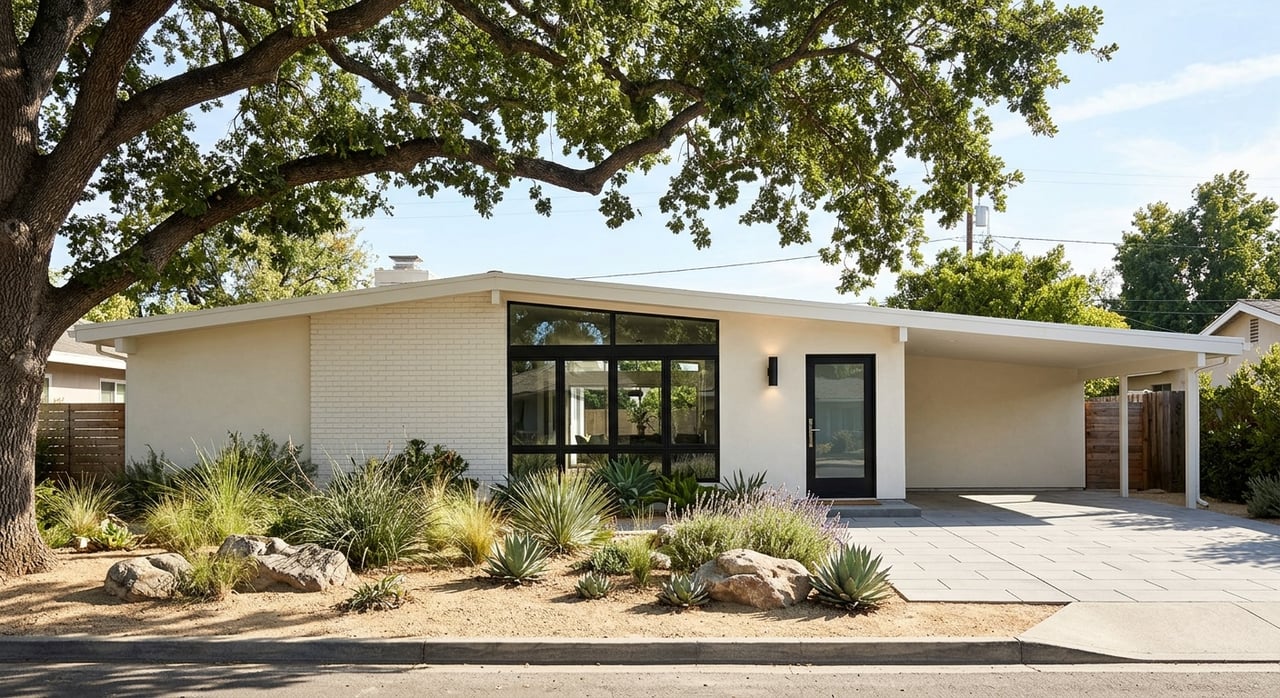
For some buyers, the design itself is a major draw. Cupertino is known for Eichler homes, which are prized for modernist architecture, open floor plans, glazed atriums, radiant-heat floors, slab foundations, low-pitched or flat roofs, and extensive glass.
If you love mid-century design, an older home may offer something a newer property cannot easily replicate. In that case, the home’s architectural identity may matter just as much as square footage or finish level.
The biggest advantage of an older Cupertino home is often its setting and character. The biggest question is usually condition.
Older homes were not typically built with the same insulation, windows, and heating performance buyers expect today. Common areas to evaluate include insulation, air leakage, attic wiring, furnace efficiency, duct sealing, and the overall condition of doors and windows.
This is why cosmetic updates should not be the only thing you focus on. A home may look refreshed on the surface but still need meaningful work behind the walls or in major systems.
When you tour an older home, try to separate style from infrastructure. New paint and updated counters are nice, but comfort, efficiency, and long-term maintenance often come down to improvements you cannot see right away.
If you are hoping to buy an older home and expand or remodel it later, neighborhood-specific standards may matter. This is especially relevant in some Eichler areas.
For example, the city’s Eichler handbook notes that Fairgrove homes are subject to R1 and R1e regulations, and additions, remodels, and new construction in that neighborhood must follow those standards. If future customization is part of your plan, this is worth understanding early.
That does not mean older homes are harder to work with across the board. It simply means your due diligence should include not only the home’s current condition, but also how flexible the property may be for future changes.
Newer Cupertino homes usually attract buyers who want more predictable comfort and less near-term upgrade work. Because new construction reflects more recent building standards, these homes often start with a stronger efficiency baseline.
California’s latest Energy Code, which took effect January 1, 2026 for new buildings and major renovations, increased efficiency standards for new single-family and multifamily housing. The update includes areas such as walls, windows, ventilation, and heat-pump adoption.
In practical terms, newer homes are more likely to have tighter building envelopes and better-performing windows than older properties. New efficient buildings also commonly use double- or triple-glazed windows, while single glazing is more common in older buildings.
For you, that often translates into less immediate retrofit work and a more predictable day-to-day living experience. If convenience and efficiency matter most, newer construction may feel like the simpler choice.
The tradeoff is that newer Cupertino homes are often denser and more compact. Because the city is built out, recent development tends to come from redevelopment sites rather than broad tracts of open land.
City project examples show this clearly. Recent proposals have included 35 townhomes on 1.67 acres, 104 townhomes on 5.63 acres, 12 townhomes on 0.46 acres, and 20 condominium units on a former single-family lot.
That pattern suggests newer homes are more likely to be attached, vertically stacked, or built on smaller parcels. If you picture a large private yard and more separation from neighbors, many newer options may feel different from what you have in mind.
This does not make them less desirable. It simply means the value proposition often shifts from land and privacy to low-maintenance living, newer finishes, and modern performance.
Choosing between an older and newer Cupertino home usually comes down to priorities. Here are a few of the most important areas to compare.
Older Cupertino homes are more often found in established detached-home neighborhoods. If you want a traditional suburban lot, more yard space, or more distance from neighboring homes, older inventory may offer more of what you are looking for.
Newer homes are more likely to be townhomes, condos, or compact rebuilds. If you prefer less exterior upkeep and are comfortable with a smaller lot or attached layout, that tradeoff may feel worthwhile.
Older homes can absolutely be improved, but they often begin from a weaker baseline. You will want to look closely at insulation, air sealing, heating systems, ducts, and window performance.
Newer homes are generally more likely to include code-driven efficiency features from the start. That can make monthly comfort and future maintenance feel more predictable.
If you enjoy the idea of customizing a home over time, an older property may offer more opportunity. But that path often requires patience, planning, and a realistic view of what systems or structural components may need attention.
If you would rather move in with fewer immediate projects, newer homes may align better with your lifestyle. This can be especially appealing if you have a demanding schedule and want a more turnkey experience.
In Cupertino, “newer” does not always mean detached. It may mean attached townhouse living, a condo, or a rebuilt home on an existing parcel.
That makes it important to compare not just age, but form. If your must-have list includes a detached layout, outdoor space, or a certain feeling of separation, make sure the newer options you consider actually deliver that.
If you are drawn to established neighborhoods, mid-century architecture, and the possibility of personalizing a property over time, an older Cupertino home may be the better fit. You may gain character and a more classic lot pattern, but you should go in with clear eyes about systems, efficiency, and future maintenance.
If you want modern comfort, newer finishes, and less near-term renovation work, a newer home may make more sense. You will often be trading some yard space or detachment for convenience, efficiency, and a more current build standard.
In Cupertino, this is a meaningful decision because the housing stock is not evenly split between old and new. Since most homes were built from the 1960s through the 1990s and very little of the inventory has been added since 2010, buyers are often choosing between a well-located older detached home and a newer, denser infill alternative.
The right answer depends on how you want to live, what level of projects you are comfortable taking on, and which tradeoffs matter least to you. If you want help comparing options in Cupertino with a clear strategy and a calm, hands-on approach, Kelly Dippel can help you navigate the market with confidence.
Stay up to date on the latest real estate trends.

I'm here to provide stress-free assistance whether you're buying, selling, or investing in real estate. Get in touch so we can have a conversation about your needs and goals.